A man loses his life over an argument that should never have become one — stabbed on a local train, over words exchanged with a stranger. A toddler is hospitalised — beaten by another toddler — and the video goes viral, and the comments split into two angry camps: blame the parents, blame the child. …

A man loses his life over an argument that should never have become one — stabbed on a local train, over words exchanged with a stranger.
A toddler is hospitalised — beaten by another toddler — and the video goes viral, and the comments split into two angry camps: blame the parents, blame the child.
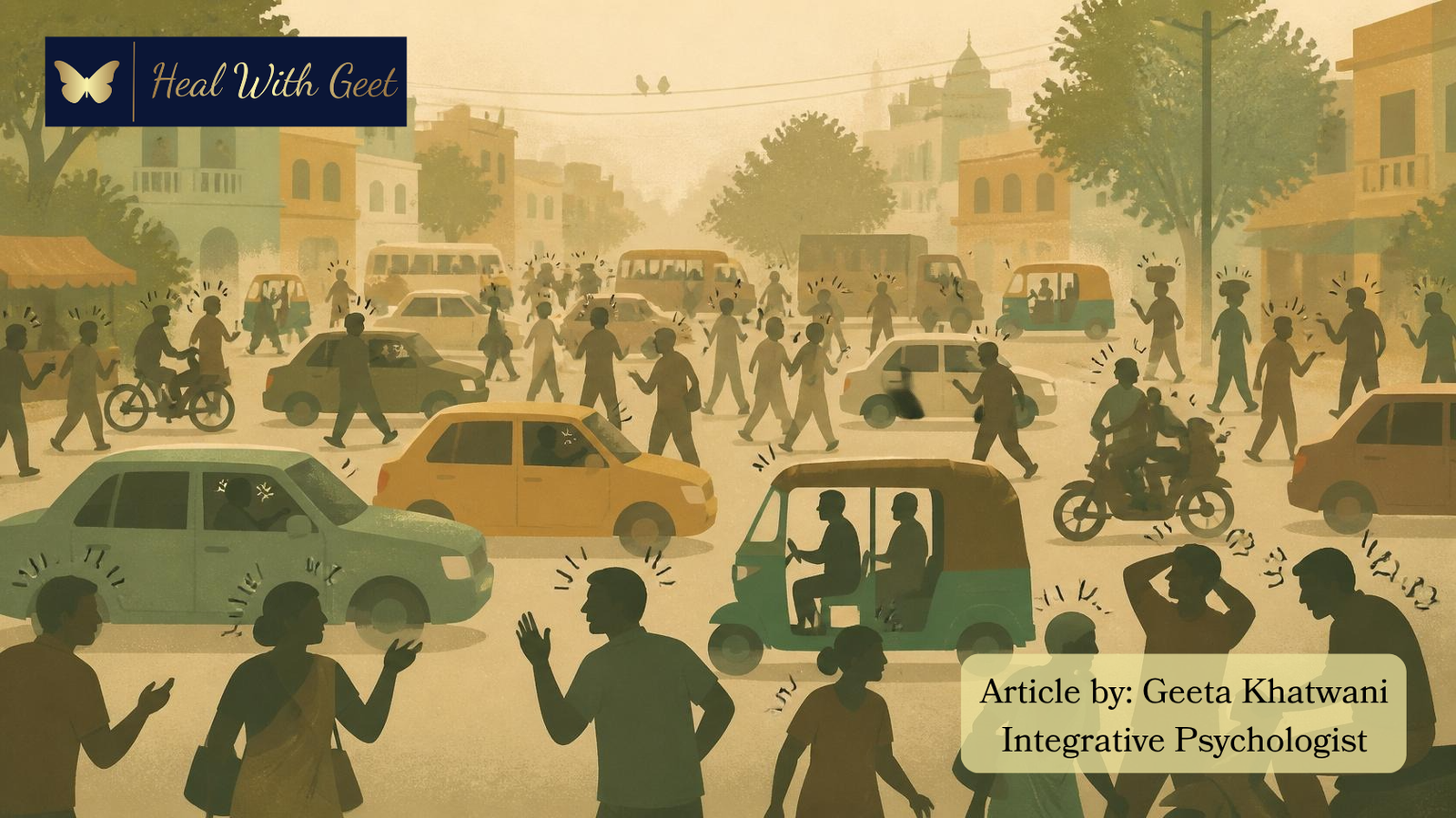
A seventy-year-old man’s car is grazed, barely, in Mumbai traffic. Not even his fault. Within minutes, he is standing on the road with a stone in his hand, ready to bring it down on the young woman driving the other car — my friend.
She didn’t fight. She didn’t provoke. She was simply there, in the wrong lane of someone else’s rage.
Three very different incidents. One common thread.
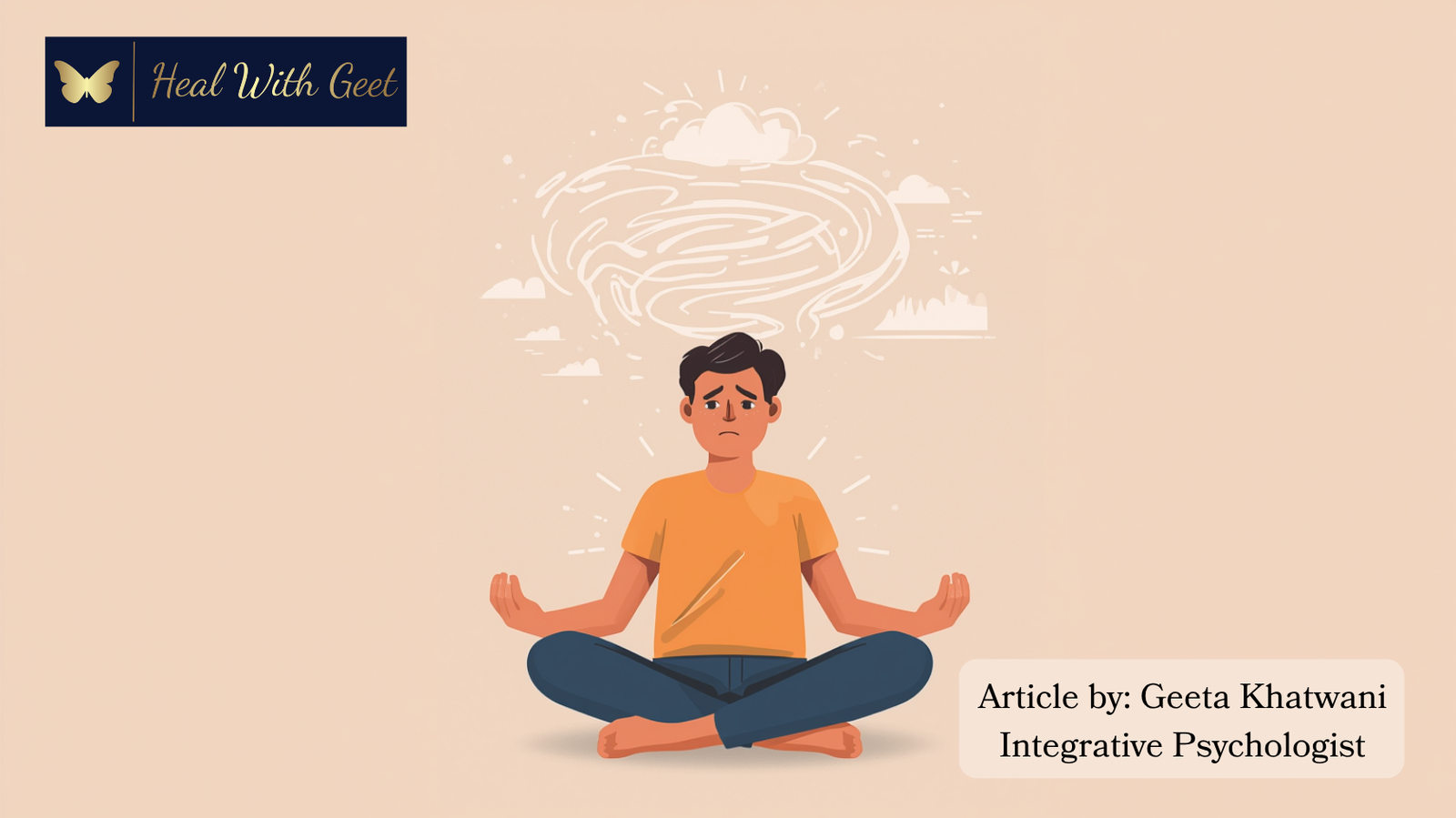
I don’t think we’re looking at an anger problem. I think we’re looking at a frustration tolerance problem.
Whose Failure Is This?
It’s tempting to hand this to a bigger villain — capitalism, consumerism, the comparison economy of social media. Systems do shape us. But systems don’t pick up stones. People do.
We live in a country that gave the world the Buddha — a civilisation whose oldest wisdom is built around creating space between stimulus and response. I’m not interested in a religious debate here. That’s not the point.
The point is simpler: somewhere along the way, we stopped treating our own frustration as something we’re responsible for. We expect a life with as little friction as possible, and when reality refuses to cooperate, many of us don’t know what to do with the discomfort.
In psychology, this is called frustration tolerance — our ability to sit with disappointment, delay, or not getting our way without reacting impulsively. It’s not something we’re born with. It’s something we learn — and somewhere along the way, many of us stopped learning it.
“I’m Not the One Fighting”
Here’s what people tell me: “Why should I work on myself? I’m not the one losing my temper on the road.”
Fair. My friend wasn’t either. But she still had a stone raised over her head.
This isn’t only about the people who explode. It’s about the world we’re all navigating now — one where someone else’s inability to tolerate frustration can become your emergency in thirty seconds. A parking spot. A scratched bumper. A look held a second too long.
You don’t get to opt out of this by being a calm person. You only get to decide how prepared you are when someone else’s nervous system spills into your day.
There’s a moment in The Lord of the Rings where the King of Rohan wants to stay out of the war closing in around his people. He’s reminded, firmly, that the war doesn’t care what he wants — it’s already at his gates. That’s where we are. Most of us aren’t looking for conflict. But conflict is increasingly looking for us, and pretending we can stay uninvolved is no longer a strategy. It’s a blind spot.
What’s Actually Driving This
We’re seeing low frustration tolerance in a society carrying enormous emotional weight — financial pressure that never lets up, relationships running on empty, a culture of constant performance, and few real opportunities to learn emotional regulation. We teach children how to succeed, but rarely how to lose, wait, or recover from feeling wronged.
None of this excuses violence. But it explains why something as small as a car brushing past another can become the final straw — and why the Mumbai Police’s advice to not engage with strangers during road rage isn’t overcaution. It’s an acknowledgement that emotional escalation has become unpredictable.
So What Do We Do With This?
I don’t have a tidy answer, but here’s where I’d start:
- Treat frustration as data, not identity. What you do in the next ten seconds is what matters. It’s a skill, and it strengthens with practice.
- Find the real source. Road rage is rarely about the road — it’s the meeting that humiliated you, the marriage gone quiet, the grief you haven’t acknowledged. Naming it reduces its power.
- Build your exit strategy before you need it. Don’t engage, don’t explain, don’t stay to be understood. Physical safety comes before being right.
- Practise self-reflection before crisis demands it. The people least likely to become the person holding the stone are usually the ones already doing the inner work.
- Stop waiting for the system alone. Policy and policing matter, but none of it regulates your nervous system for you. That comes from practice — journaling, therapy, mindfulness, or simply learning to pause.
The Skill We Can’t Afford to Lose
Are we raising a generation that has no idea what to do with frustration? That toddler didn’t invent violence on his own. He learned it somewhere — at home, on a screen, through the silent message that anger is acceptable but disappointment isn’t.
This isn’t a call to panic. It’s a call to notice — to stop asking “why should I introspect, I’m not the problem” and start asking, “am I building this capacity before life asks me to?”
None of us gets to choose whether frustration shows up. We only get to choose what we do when it does — perhaps one of the most important psychological skills any society can teach.
What happens when a society forgets how to handle frustration? Perhaps we’re already living the answer.
— Geet
Book a Consultation
It’s easy and free!